
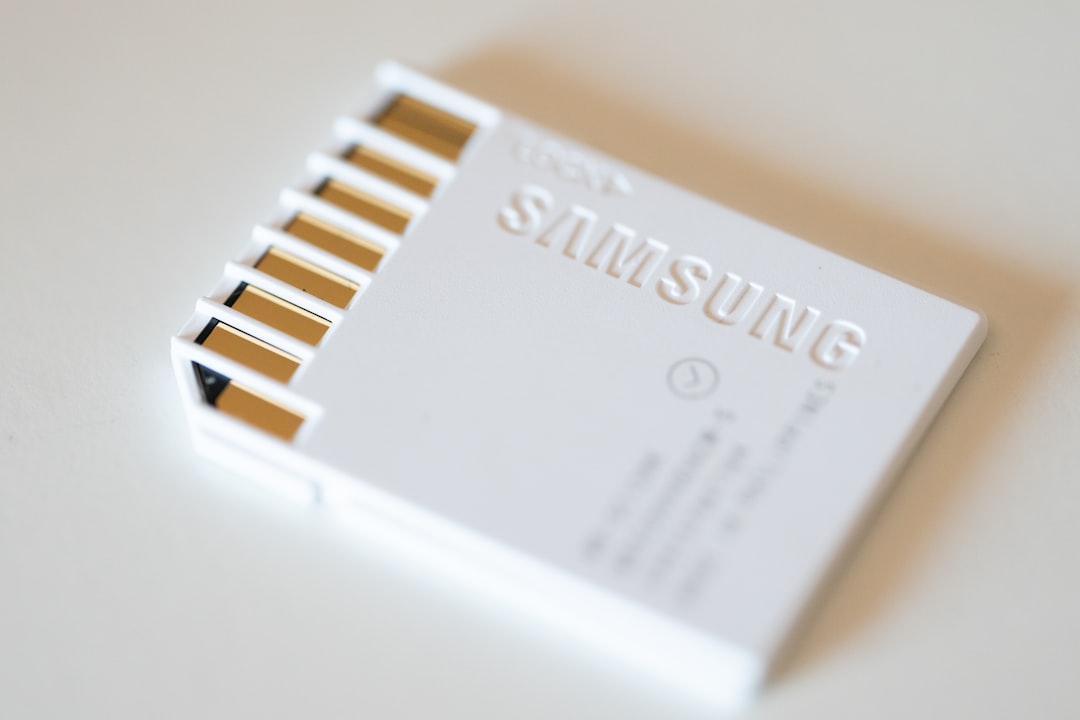
Samsung is no longer content to watch from the sidelines. The South Korean electronics giant has formed a dedicated humanoid robotics division — hiring a former Hyundai executive to lead the charge — signaling that one of the world's most powerful hardware manufacturers is ready to plant its flag in the fastest-moving frontier of physical AI.
The move is more than a personnel announcement. It is a strategic declaration that the next hardware supercycle won't be won in data centers alone. It will be won on factory floors, in warehouses, and eventually in the spaces where humans live and work. And Samsung, with its unmatched semiconductor manufacturing and consumer electronics reach, intends to be at the center of it.
A New Division, A New Battlefront
Samsung's decision to carve out a standalone robotics unit — rather than folding humanoid ambitions into an existing business line — tells you everything about how seriously the company is taking this moment. Appointing an executive from Hyundai, one of the most aggressive established players in industrial robotics through its Boston Dynamics ownership, gives the new division immediate credibility and a direct line to hard-won operational knowledge.
This is the corporate architecture of a company that wants to move fast. Dedicated units with dedicated leadership don't get formed when executives are hedging. They get formed when the board has made a decision.
The timing is deliberate. NVIDIA's physical AI push — embedding intelligence into robots that can perceive, reason, and act in the real world — has reset expectations for what humanoid machines can actually do in the near term. Samsung is reading the same roadmap and positioning its formidable hardware capabilities as the supply chain backbone that a robotics revolution will desperately need.
The Embodied AI Gold Rush Is Real — and It's Now
The phrase "physical AI" has rapidly shifted from conference-room buzzword to genuine capital allocation priority. What separates this moment from earlier robotics hype cycles is the maturation of the underlying AI stack: large language models that can handle instruction-following, computer vision systems that operate reliably in unstructured environments, and edge inference hardware powerful enough to run it all without a cloud tether.
"The next hardware supercycle won't be won in data centers alone — it will be won on factory floors, in warehouses, and eventually in the spaces where humans live and work."
- AITechWire AnalysisSamsung's entry into humanoid robotics accelerates a dynamic already reshaping corporate capital expenditure. Manufacturers, logistics operators, and defense contractors are increasingly willing to write large checks for robotic systems that can operate alongside humans without requiring purpose-built environments. The bottleneck has never been demand — it has been the supply of capable, affordable hardware at scale.
That is precisely the gap Samsung is positioned to fill. A company that designs and fabricates its own chips, builds its own displays, and manufactures at a scale few can match is not just another entrant in the humanoid space. It is a potential platform company for the entire ecosystem.
Capex Signals, Investor Implications
For investors tracking the AI hardware trade, Samsung's move is a significant data point in a trend that is becoming impossible to ignore. Corporate capital expenditure is visibly rotating toward embodied AI infrastructure — the sensors, actuators, edge processors, and full-stack robotic systems that will define industrial automation in the back half of this decade.
The immediate read-through is bullish for the broader robotics and AI hardware ecosystem. Every serious humanoid program needs chips. It needs sensors. It needs actuators and power systems. Samsung's entry doesn't cannibalize that demand — it validates and amplifies it. A company of Samsung's scale committing to humanoid development is the kind of signal that unlocks procurement budgets and accelerates customer adoption timelines across the supply chain.
The ripple effects extend to software as well. As more hardware platforms come to market, demand for robotics operating systems, simulation environments, and AI training infrastructure will follow. The companies building foundational software layers for physical AI — much like those building orchestration layers for enterprise AI agents — stand to benefit substantially from a more competitive, more invested hardware landscape.
The Bottom Line
Samsung entering humanoid robotics is not a moonshot bet. It is a calculated, well-resourced move by a company that has spent decades mastering the art of manufacturing complex electronics at global scale. The appointment of a proven Hyundai executive to lead the division signals operational seriousness, not experimentation.
The broader race toward physical AI — driven by NVIDIA's infrastructure investments and now accelerated by Samsung's entry — is compressing timelines across the board. Companies that were planning five-year robotics roadmaps are being forced to think in two-year windows. That urgency is showing up in hiring, in capital allocation, and now in corporate structure.
Humanoid robotics is no longer a research project. With Samsung in the arena, it is becoming an industry. Investors, partners, and competitors should plan accordingly.
Follow @AITechWireIO for daily coverage.